We enable smart irrigation of green spaces!
Measure. Understand. Act.
Sensor-based monitoring of green spaces transmits data over the LoRaWAN network for analysis, so that irrigation recommendations can be provided.
Measure. Understand. Act.
Sensor-based monitoring of green spaces transmits data over the LoRaWAN network for analysis, so that irrigation recommendations can be provided.
Smart green space management
Learn how we use smart sensors and data-driven analysis to optimize the irrigation of urban green spaces, for healthier trees, beds and parks with efficient use of resources.
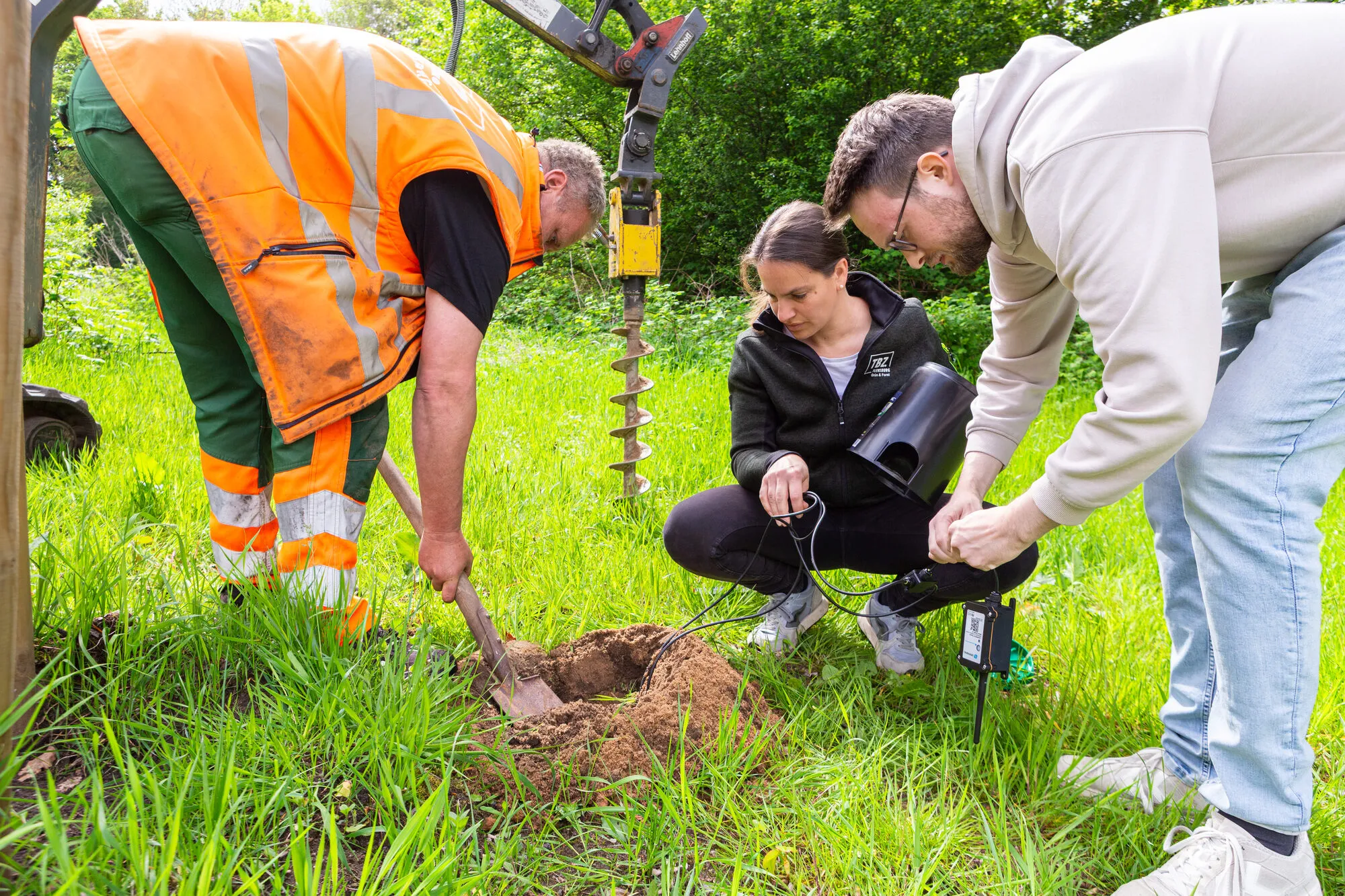
Soil moisture is measured at different soil depths depending on the vegetation type, providing data across different soil layers.
In smart green space management, sensors continuously monitor green spaces and provide the data basis for their irrigation and care. This allows measures to be controlled precisely and adapted to the respective site conditions.
Soil moisture data is provided by sensors placed at different depths.
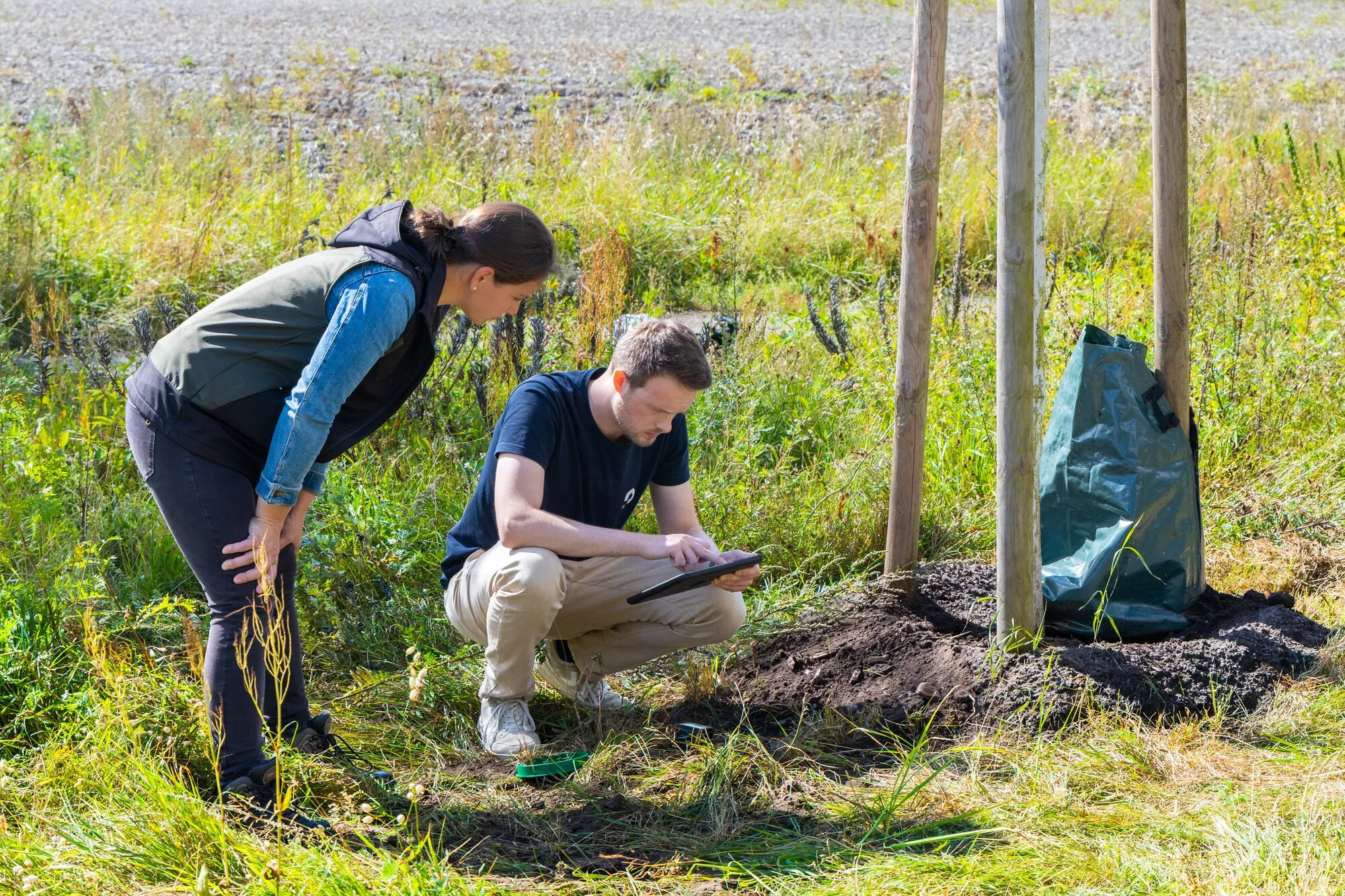
Analysis of the data transmitted by sensors for demand-based irrigation of young trees.
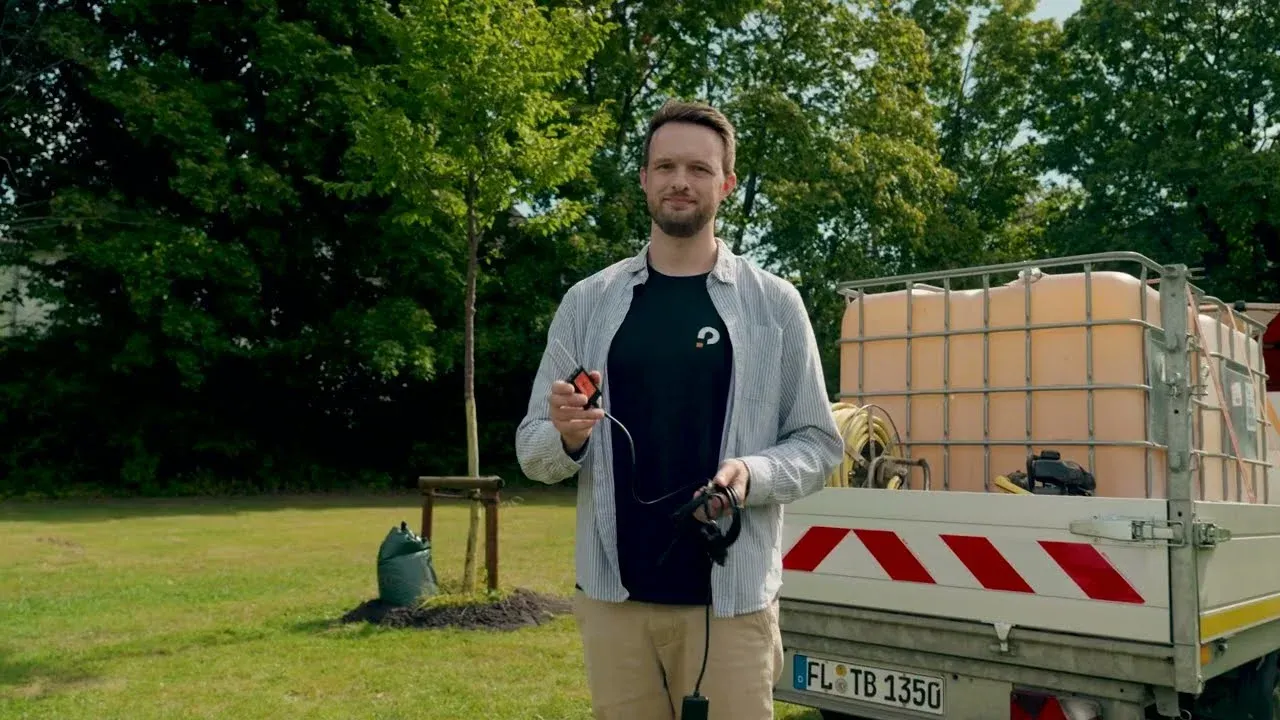
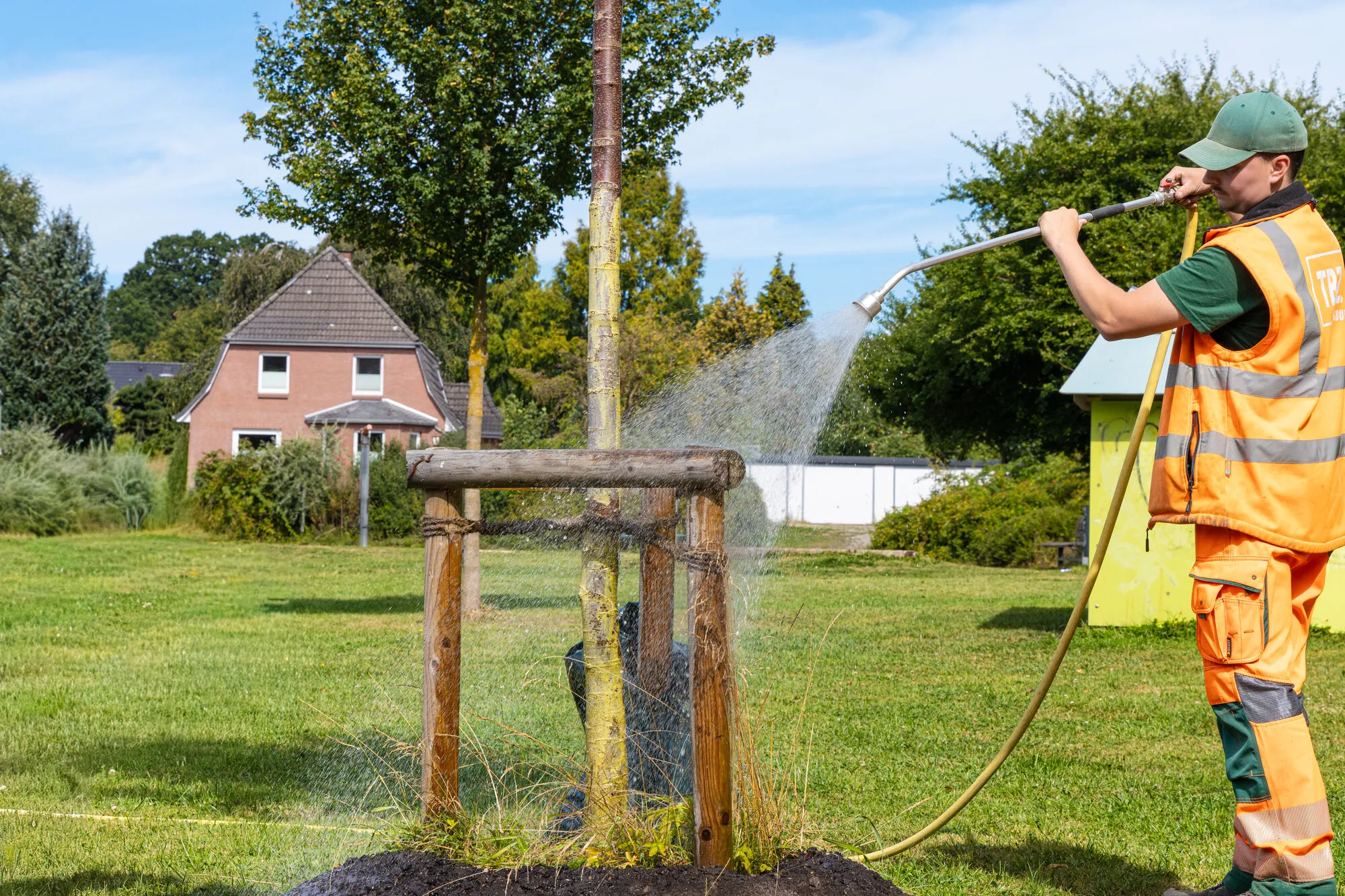
Young trees are particularly vulnerable to heat and therefore need protection. That's why trees are monitored during their first three years at their site.
Using the LoRaWAN network, different locations can be monitored, and additional ones can easily be added.
Cities water by feel.
Not by need.
Urban green spaces regulate the microclimate, promote biodiversity and strengthen a location's competitiveness. But persistent drought and a lack of digitalization threaten this asset. Many municipalities base their irrigation planning solely on the judgment of individual staff, with no data basis at all. Instead of demand-based irrigation, watering is done uniformly, wasting water while still not reaching every tree. Unoptimized irrigation trips also cause avoidable CO₂ emissions.
Water is consumed by a mid-sized municipality for irrigation, often without a data basis and without demand-based control.
is the cost of a single street tree. If it is lost due to insufficient irrigation, this damage alone covers the sensor costs for several years.
can be the cost of a complete street bed, including civil works, substrate and infrastructure.
From sensor data collection through intelligent route planning to detailed analysis: all the features for efficient and sustainable green space management
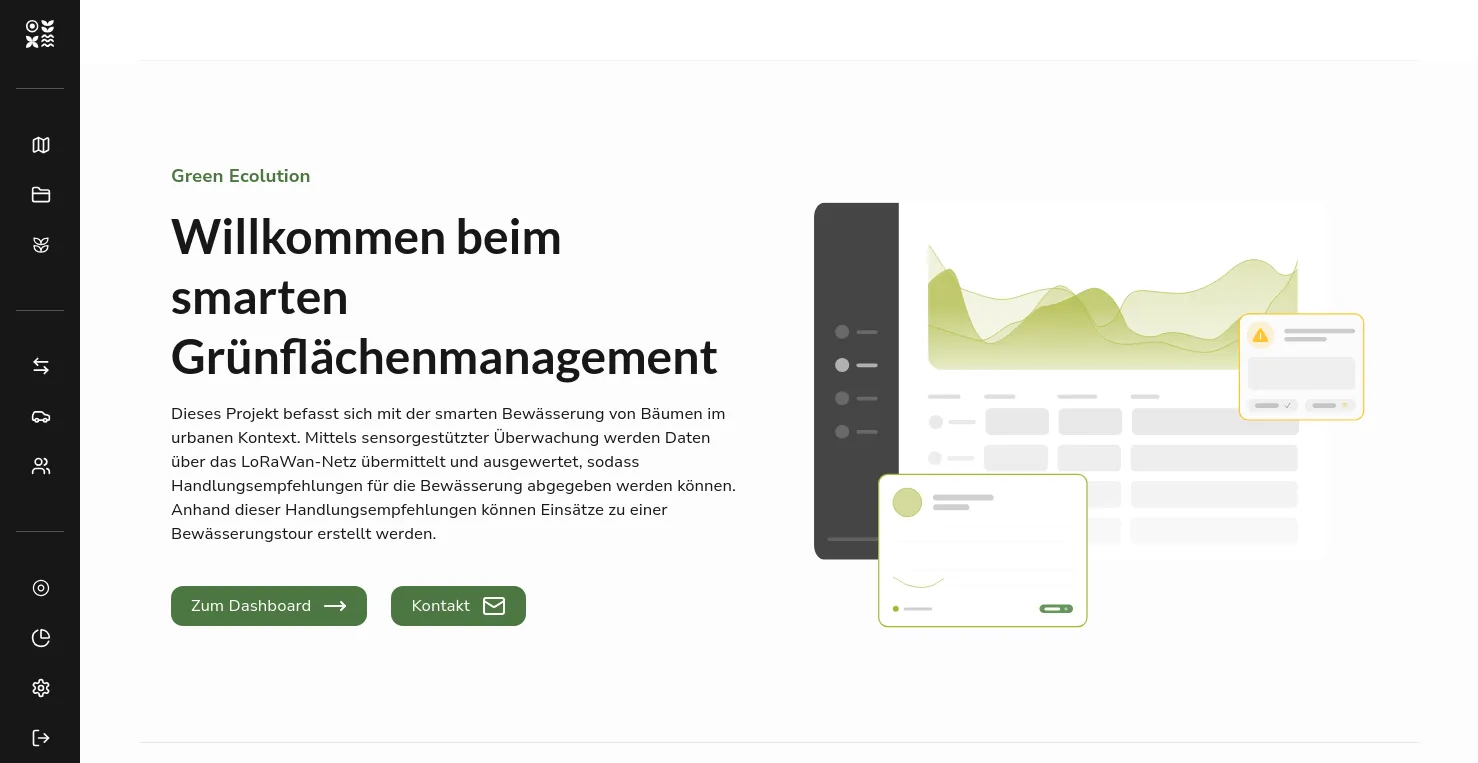
All key KPIs at a glance: soil moisture values, upcoming tours, team availability and vehicle status in one central dashboard.
Group trees into irrigation units. Automatic calculation of water demand per cluster.
Manage vans and trailers with water capacities. Automatic refill stops in route planning.
Optimized irrigation schedules with real-time status: from “planned” through “active” to “completed”.
Manage drivers by license class and availability. Optimize deployment planning.
Document actual water consumption per cluster and tour. Analyze trends and optimize future planning based on data.
Designed for use in public spaces. Sensors at three depths (30, 60 and 90 cm) capture the full root profile of a tree, from the near-surface fine roots to the deeper main roots. This makes it possible to see whether water actually reaches the root zone or only wets the surface. Installation is flush with the ground using standard soil augers. Maintenance work such as mowing is not affected.
Volumetric measurement of soil moisture at multiple depths
Measurement of soil temperature for precise irrigation recommendations
Measurement of suction tension to determine water availability
As part of the research project, two videos were produced alongside the sensor solution and the software. They introduce the project: its objective, the problem, and the solution developed.
A brief introduction to the project. In about half a minute, you'll learn what Green Ecolution is about.
The detailed video goes deeper and explains the key background, details, and next steps of the project.
Soil moisture sensors capture parameters such as soil moisture, temperature, and soil water tension at multiple depths (30/60/90 cm). The data is transmitted energy-efficiently via LoRaWAN.
A traffic-light system shows the current irrigation need on a map. Staff can see at a glance which green spaces need water. Time series enable detailed analyses.
Automated dispatch and route planning generates optimized irrigation routes, taking into account water capacity, vehicle size, and road restrictions.
The publicly accessible demo instance shows the current feature set: map view with a traffic-light system, dashboard with sensor data, and automated route calculation. No installation needed, directly in the browser.

We continuously develop Green Ecolution further. Take a look at the latest features and find out what we're currently working on.
In collaboration between PROGEEK, Smarte Grenzregion, the City of Flensburg and Hochschule Flensburg, a demand-driven and data-based irrigation system for trees is to be established.
PROGEEK stands for innovative IT solutions, custom software development, and digital consulting, with the goal of guiding companies on their way into the future of digitalization.
Visit website
The project "Smarte Grenzregion zwischen den Meeren" aims to drive digital transformation in the region in order to shape integrated and sustainable urban and regional development and strengthen the common good.
Visit website
Hochschule Flensburg offers practice-oriented degree programs with a focus on applied research and close collaboration with industry.
Visit website
The Technisches Betriebszentrum (TBZ) is the central service provider for the City of Flensburg and is responsible, among other things, for the upkeep of public green spaces, street cleaning, and waste management.
Visit websiteThe "Green Ecolution" project was launched as part of a research project in the Applied Computer Science (Angewandte Informatik) master's program at Hochschule Flensburg. Following the successful completion of the research project, the further development of the system is now being continued by PROGEEK, in close collaboration with Smarte Grenzregion and the City of Flensburg.
The "Green Ecolution" research project demonstrated how digital technologies can be deployed to make the irrigation of urban trees more efficient, more sustainable, and more resource-conscious. Through the use of modern sensor technology and intelligent data analysis, a foundation was created to significantly reduce water consumption and maintenance effort.
The insights gained and the systems developed make an important contribution to sustainable urban development in Flensburg. They support data-based decision-making and promote the responsible use of natural resources, for the benefit of the environment, the city administration, and citizens.
The project's source code is available in a publicly accessible GitHub repository. This means the current state of development can be viewed at any time, which creates transparency and allows interested people to follow the ongoing development or get actively involved.
A connection to the Open Data Portal of the state of Schleswig-Holstein is also planned for the future, in order to make selected sensor data publicly accessible. This extension is currently in the planning stage.
As part of the research project, the following sensors were used to capture precise data on soil moisture and soil condition. These sensors formed the basis for the development and testing of the system.
In future development phases, the sensor technology can be further adapted or extended depending on requirements and technological progress.
The "Green Ecolution" research project was successfully completed as part of the Applied Computer Science (Angewandte Informatik) master's program at Hochschule Flensburg. Building on the results achieved in the project, the further development is now being continued.
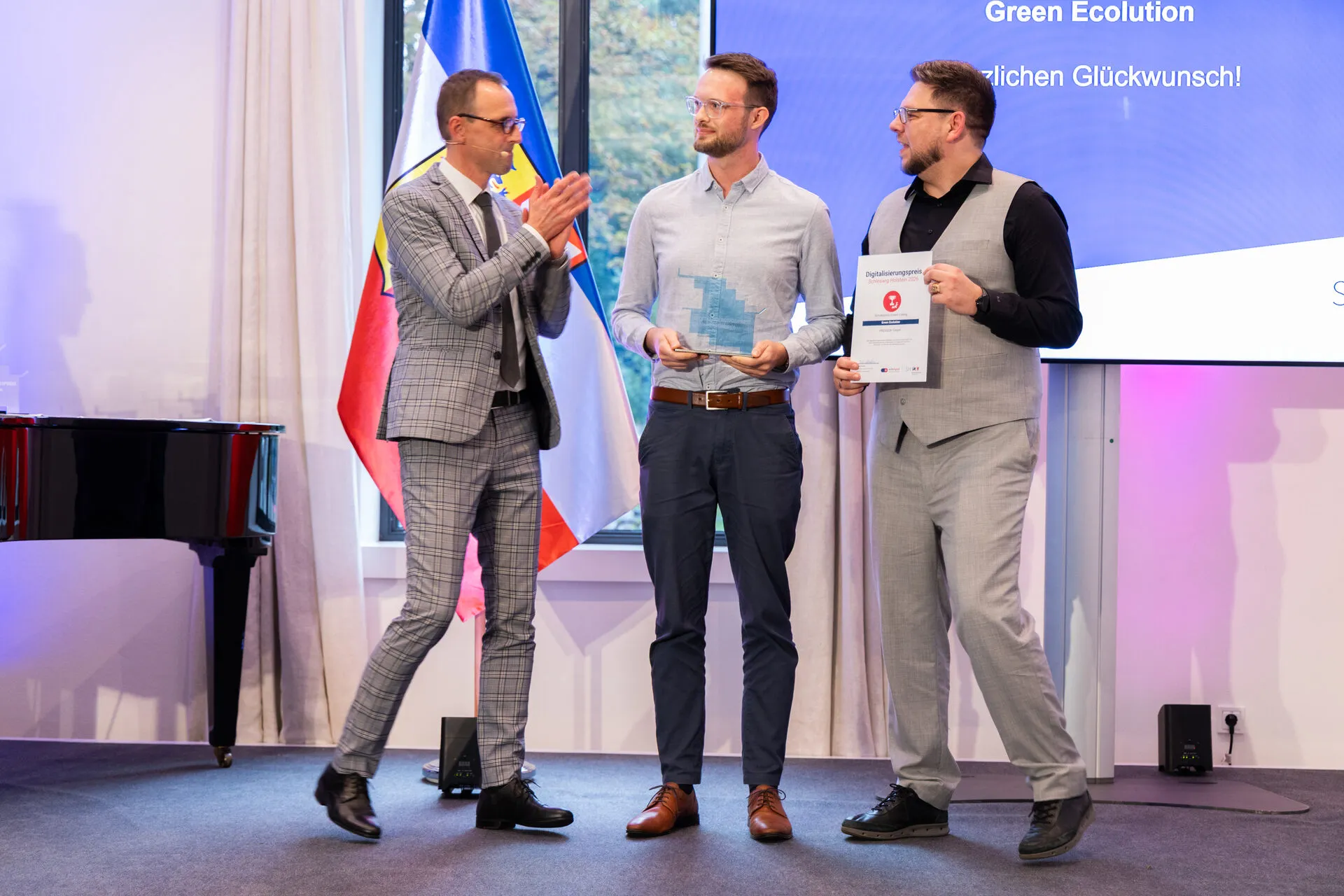
In October 2025, the project received funding through the DigitalHub Call for Concepts of the state program "Offene Innovation – Open Source made in Schleswig-Holstein". This enables the system to be further expanded and tested in practice.
PROGEEK, the City of Flensburg, and Smarte Grenzregion are currently working together on the further development and integration of the system, in order to transfer the insights gained into everyday municipal practice on a lasting basis.
Do you have questions, feedback, or a request? We welcome your message and will get back to you as soon as possible.